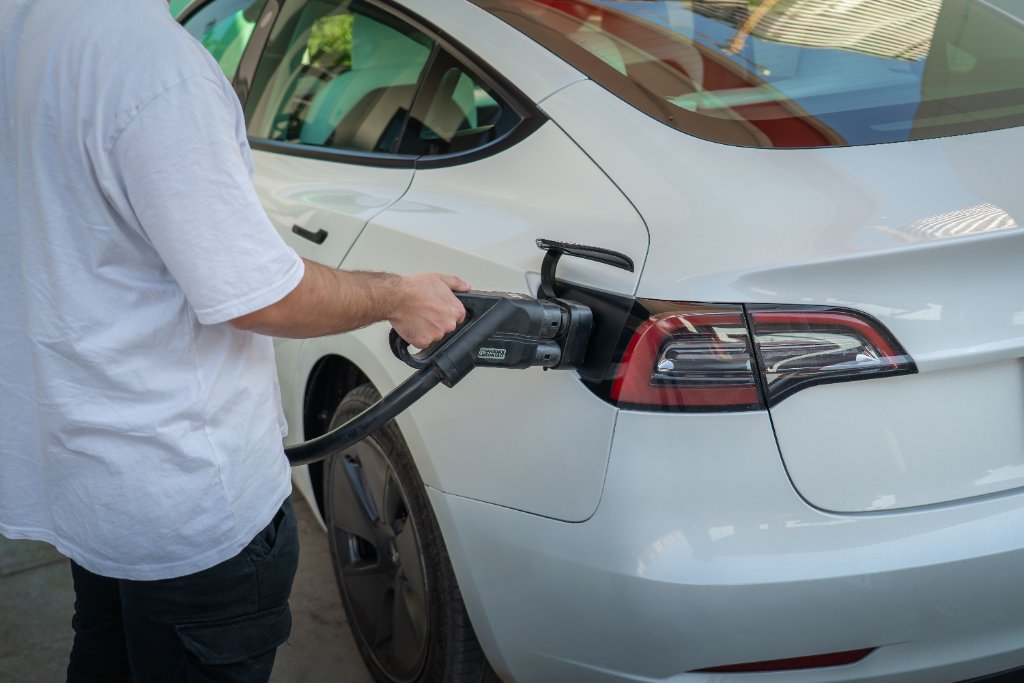
Your Car, the Home Battery: Why 2026 Is the Year Vehicle-to-Home Charging Got Real
Executive Summary
For most of the last decade, the idea that your electric car could power your house was a line in a sales brochure, not something an Australian household could actually do. That is changing fast, and it is happening at the same time EV ownership itself is hitting record levels nationally.
Background
EVs are no longer a niche purchase
Electric vehicles made up 13.1% of all new car sales in Australia in 2025, up from 9.5% the year before, with a record 16.7% share in December 2025 alone. More than 156,000 electrified vehicles were sold for the year, a 38% jump, and battery electric vehicle sales crossed 100,000 for the first time. Australia's total EV fleet passed 454,000 vehicles by the end of 2025. Put simply: the battery on wheels sitting in more and more Australian driveways is no longer a rare sight.
That matters, because a modern EV battery typically holds 60 to 100kWh of storage, five to ten times the capacity of a standard home battery. For years, that stored energy only ever went one way: into the car, to drive somewhere. Bidirectional charging changes that.
Three letters, three very different things
There is a lot of loose talk about your car powering your house, but it actually covers three distinct technologies:
V2L (Vehicle-to-Load) is the simplest option and already common in many EVs sold today. It lets the car power external devices, like tools or camping gear, through a regular power point or adaptor.
V2H (Vehicle-to-Home) means the car supplies power directly to a home's electrical system via a bidirectional charger, separate from the grid. This is the version most relevant to cutting a household bill or riding out a blackout.
V2G (Vehicle-to-Grid) means the car exports stored power back into the electricity network itself, requiring network approval and retailer participation, similar to how a solar feed-in tariff works but for a much bigger battery.
What Happened
What changed in 2025-26
The main reason this stalled for so long was not the cars, it was the rulebook. Australia's key inverter standard for bidirectional charging, AS/NZS 4777.2, did not properly cover two-way EV charging until an amendment was finalised and came into effect in August 2025. That gave electricity networks the compliance framework needed to actually approve bidirectional chargers for connection to Australian homes. Since then, a small but growing number of bidirectional chargers have received Clean Energy Council approval.
The trials already running
Australia's first real-world test came via the REVS project (Realising Electric Vehicle Services), which deployed 51 Nissan LEAFs across the ACT to trial vehicle-to-grid technology, a genuine world-first collaboration between energy, transport, charging, and government partners. It led to South Australia approving the country's first real residential V2G pilot: a Barossa Valley winery owner who had been paying around $6,000 a year in electricity swapped to earning roughly $50 a week selling stored power back to the grid from his Nissan LEAF.
Since then, momentum has picked up:
AGL is running a V2G trial with a full commercial launch planned for 2026, describing EVs as home batteries that happen to also drive.
Origin Energy is piloting a V2G program in 2026 offering participants a leased EV, a bidirectional charger, and a set annual charging allowance, in exchange for allowing the retailer to draw on the car's battery, with projected annual savings estimated between $500 and $2,500 depending on usage.
SA Power Networks and the ACT's Evoenergy have both approved pathways for compliant bidirectional charger installations in their networks, with SA Power Networks running trials aggregating storage across around 50 vehicles.
Several Virtual Power Plant operators are exploring folding V2G-capable EVs into their existing solar-and-battery VPP programs alongside wall-mounted batteries.
Market Impact
The economics, realistically
Installed cost for a home bidirectional charging setup currently runs $6,000 to $15,000, depending on the hardware and whether it is AC- or DC-coupled, in the same ballpark as a wall-mounted home battery, but for a car that already holds far more storage.
V2H (peak-shaving only) means using the car to soak up daytime solar and discharge it through the evening peak instead of exporting or buying grid power. This is realistically worth around $1,000 to $1,200 per year for a typical household, with some real-world users reporting daily grid import reductions of up to 70%.
V2G (exporting to the grid on a dynamic or wholesale-linked plan) carries a higher but more variable upside. Some retailers have floated indicative annual values as high as $3,000, with early trial participants reporting single-day earnings of $250 to $300 on extreme demand days.
As backup power, a typical EV battery can run an average Australian home for three to five days during an outage, several times what a standard wall battery can manage.
Not every EV owner can do this yet
This is very much an early-adopter technology, not a universal feature:
Compatible cars are still limited. The Nissan LEAF remains the only factory-delivered, fully warranted bidirectional BEV in Australia. Some Kia, Hyundai, Mitsubishi, MG, and BYD models have the hardware or firmware pathway, but compatibility often depends on specific model years and software builds. Most Tesla and BYD vehicles currently sold in Australia support V2L only, not V2H or V2G.
A standard home charger will not work. Bidirectional charging needs purpose-built hardware that safely isolates from the grid during outages, installed by a specialist electrician, not a DIY upgrade.
Manufacturer warranty positions vary. Some carmakers are still working through how repeated bidirectional cycling affects battery warranties, so it is worth getting that in writing before committing.
Availability risk is real. Unlike a wall battery, an EV's storage is only available when the car is actually home. A vehicle away on a road trip during a blackout provides no backup at all.
Why It Matters
Why this matters for GridMate users
For households already considering solar, a battery, or an EV, vehicle-to-home charging is becoming a genuine fourth option in the mix. For some, it may make more financial sense than buying a separate wall battery outright, since the EV's storage is already paid for as part of the car. As the regulatory groundwork now exists and more manufacturers commit to bidirectional-ready models, this is a space likely to move quickly over the next few years. It is worth tracking for anyone weighing up their next home energy upgrade.
Key Takeaways
- EVs made up 13.1% of new car sales in Australia in 2025, with the total fleet passing 454,000 vehicles
- A modern EV battery holds 60 to 100kWh, five to ten times the capacity of a standard home battery
- AS/NZS 4777.2 bidirectional charging amendment took effect in August 2025, enabling CEC-approved charger installations
- Real-world V2H peak-shaving is worth approximately $1,000 to $1,200 per year for a typical household
- V2G on dynamic tariffs could be worth up to $3,000 per year, with single-day earnings of $250 to $300 reported in trials
- The Nissan LEAF remains the only fully warranted bidirectional BEV in Australia; most Tesla and BYD models are V2L only
- Installed cost for a bidirectional charger runs $6,000 to $15,000, comparable to a wall-mounted home battery
Last reviewed: 12 July 2026
Unlock GridMate for $10/month
Get full access to all guides, market insights and bill analysis tools.
Currently supports single-rate tariffs. Time-of-use and controlled load support coming soon.
Already a member?